Openers · Richmond Hill
Garage Door Opener Diagnosis and Repair
You press the remote from the driveway and hear the motor hum overhead, a steady drone with no movement behind it. The door stays shut.
Garage Door Opener Diagnosis and Repair
In plain words
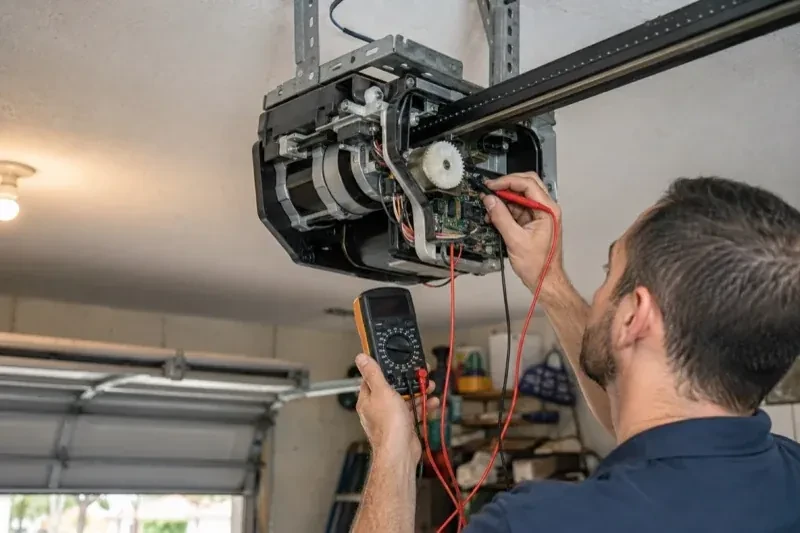
Garage door opener diagnosis is a fault-finding visit with a fixed order of tests. The technician confirms power at the ceiling receptacle, tries each control on its own, checks the safety sensors and their indicator lights, examines the drive train from motor to trolley, and reads any flash code the unit is showing. Only then is a part named, because a dozen different faults look identical from the driveway and guessing at the part costs you a second visit. When the cause is a small component, the repair is made while the technician is there; when it is not, you get a clear account of what comes next.
How the visit goesNothing. No light, no click, no hum from the unit on the ceiling. The remote is dead, the wall button is dead, the keypad is dead. It worked yesterday evening, before the storm knocked the power out for an hour and brought it back with a flicker.
Richmond Hill
How the visit goes
Power at the ceiling
The receptacle above the opener is checked before anything cleverer. A plug can work loose when a car door is slammed underneath it, a breaker or ground-fault device can trip during a storm and stay tripped, and an outlet that shares a circuit with a freezer or a workshop tool may have failed quietly. The technician confirms voltage at the receptacle, watches for the head unit's light and indicator when power is restored, and where the model allows it checks the transformer output and the small fuse on the board. A silent opener is very often an unpowered one, and this step settles that early.
Door first, opener second
When the by-hand check shows the door is heavy, drifting or binding, the work order changes. The opener is left disconnected and the door side is corrected first: worn rollers replaced, dry hinges and rollers lubricated, loose track brackets tightened, a dropped header bracket re-secured, and spring or cable faults handed to the tensioned-hardware work they require. Only when the door lifts and holds by hand is the trolley re-engaged and the opener tested again. Very often the opener that seemed faulty runs perfectly once it is moving a balanced door, and the repair becomes lighter and longer-lived than any change made at the motor.
A clear path if the unit is near its end
When the diagnosis finds an opener that is safe today but not for long, you leave with a plan rather than a surprise. You know which part is wearing, what the warning signs will be, and how the decision to replace is likely to present itself. If the unit is one the industry recommends replacing, such as a head unit with no photo eyes, that is set out plainly along with what a modern belt or direct-drive unit changes: quieter running, battery backup, soft start and stop, and sensors that meet the current standard. The door is left working and safe while you decide.
Garage Door Opener Diagnosis and Repair
In the van
- Drive gear and sprocket kit
- Bell wire and clips
- Chain or belt
- Garage door lubricant
- Trolley and carriage
What affects the quote
Same fees day, night or weekend
1Getting in when the door is stuck shut
A garage with no side door and no house connection means working the release from outside before any test can begin, and the quote includes that entry step.
2Age and model of the unit
Parts availability is checked by exact model and part number rather than assumed from age, since some units even from the last two decades already have a board or component discontinued with nothing to replace it. Sourcing a part, or replacement instead, shapes the quote.
3Distance to your door
Travel is part of the visit. An address across town and a rural property at the end of a concession road involve different driving, and the quote reflects the trip.
Garage Door Opener Diagnosis and Repair: questions
My opener has no photo eyes. Can it be kept in service?
Openers without an external sensor date from before 1993, when photo eyes or an equivalent device became part of the operator standard. The door industry's own inspection checklist and consumer safety regulators both recommend replacing such units rather than repairing them, because the contact-reversal feature alone is a weaker protection for anyone or anything under the door. A diagnosis on one of these units usually ends with a replacement recommendation, explained plainly.
How do you tell whether it is the opener or the door?
By separating them. With the door closed, the emergency release is pulled so the opener is out of the picture, and the door is lifted by hand. A balanced door rises without strain, hangs where you leave it around waist height and stays open at the top. If it does, the opener is at fault. If it is heavy, drifts or binds, the door is the cause and the opener was only reporting the strain. This one check prevents a great many wrong repairs.
My remote only works when I am close to the door. Why?
Short range is almost always interference or a weak signal, not a broken opener. Certain LED bulbs, including ones fitted in the opener's own sockets, emit noise on the frequency remotes use. A remote battery near the end of its life also loses reach before it fails outright. The technician tests range with a known-good remote, swaps bulbs, checks the antenna wire hangs free below the head unit, and replaces the battery or remote as needed.
Openers & Access
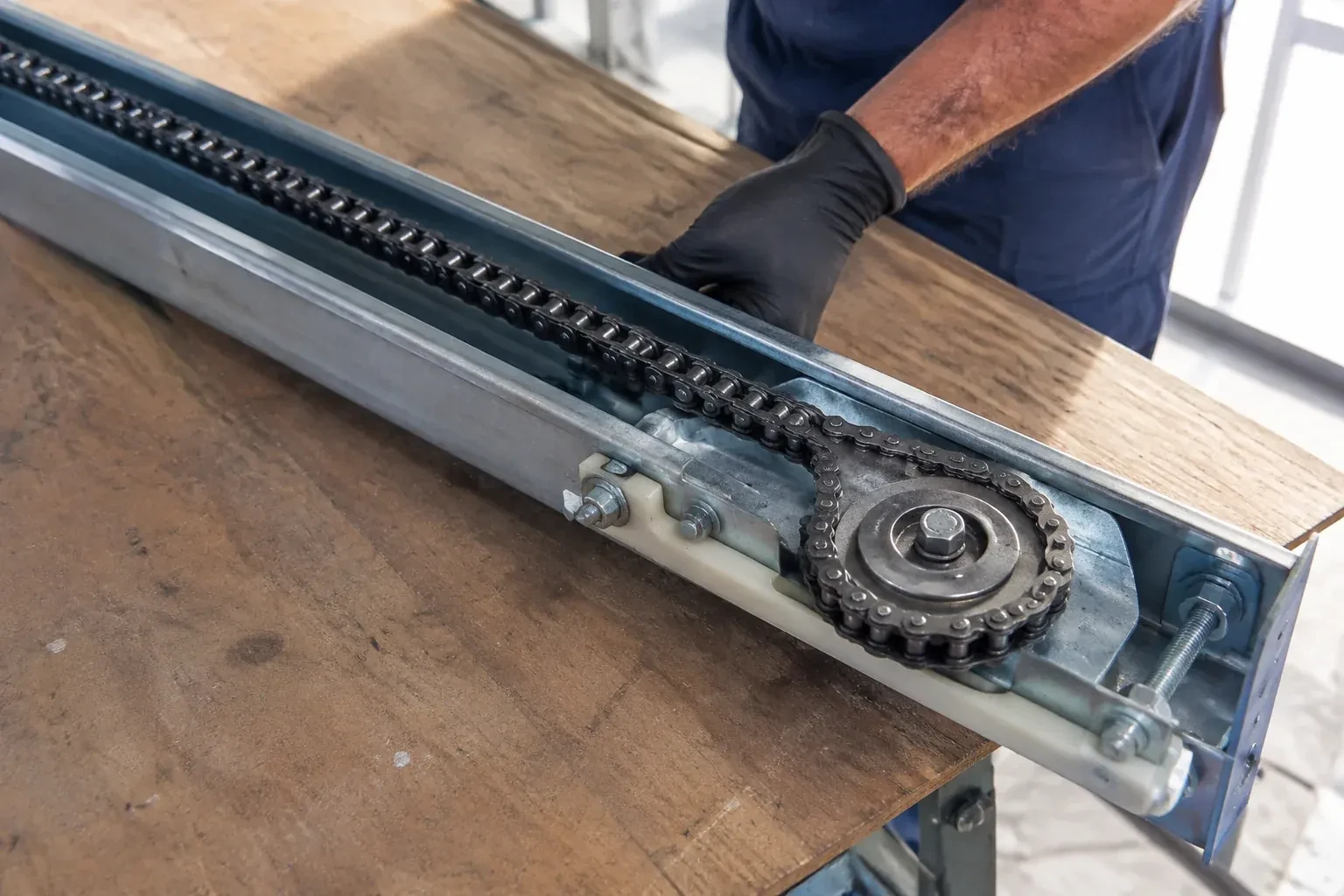
- Belt-Drive Opener RepairThe belt looks fine from a distance, but up close the rubber has cracked across the back in dozens…
- Garage Door Opener ReplacementThe remotes only work from the end of the driveway now, and one of them disappeared with a set of…
- Photo-Eye Sensor Alignment or ReplacementAfter a cold night the door stays open until the garage warms up.
Garage Door Opener Diagnosis and Repair near you
Repairs, hardware, openers and new doors: those are the four kinds of garage door work we do in Richmond Hill. Most visits are repairs and tune-ups, springs and cables are the most common replacements, opener and remote problems come next, and new doors are planned with more time and care.